What does § 46.2-910 require?
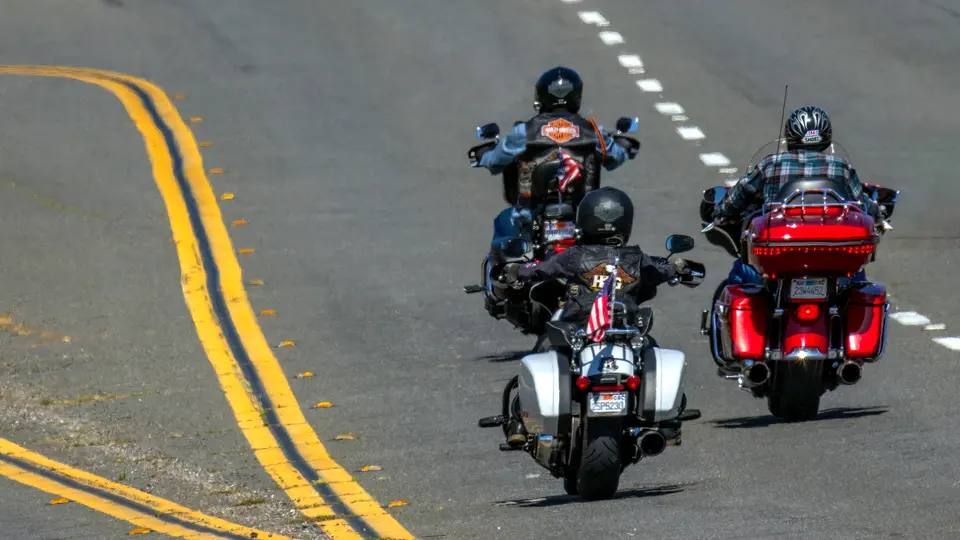
Section 46.2-910(A) sets two protective requirements for motorcycle operators. The operator must wear a face shield, safety glasses or goggles, or the motorcycle must have safety glass or a windshield. Operators and any passengers must wear protective helmets.
The statute exempts motorcycles with wheels of eight inches or less in diameter, and three-wheeled motorcycles or autocycles with nonremovable roofs, windshields and enclosed bodies.
Is riding without a helmet negligence?
Not per se. Failure to wear a face shield, safety glasses or goggles, or protective helmets "shall not constitute negligence per se in any civil proceeding" (Va. Code § 46.2-910(A) (opens in a new tab)). The statute keeps the lack of a helmet from being treated as automatic negligence in a civil claim.
What riding rules apply?
- Seat. The operator rides only on the permanent seat, except standing on both footpegs when safety dictates, for no longer than necessary. The operator may not carry another person unless the motorcycle is built for more than one person, and a passenger footrest is required on such a motorcycle (Va. Code § 46.2-909 (opens in a new tab)).
- Lights. Every motorcycle or autocycle needs at least one headlight, and up to two auxiliary headlights may be added. Headlights may not project a glaring or dazzling light to approaching persons or carry aftermarket modifications that make them appear blue (Va. Code § 46.2-1012 (opens in a new tab)).
- Two abreast. Nothing in the section prohibits two two-wheeled motorcycles from traveling abreast in a lane designated for one vehicle (Va. Code § 46.2-857 (opens in a new tab)).
How does contributory negligence affect riders?
Virginia courts apply contributory negligence as a complete bar to recovery. The helmet statute removes one argument, automatic negligence for not wearing a helmet, but the other facts of the crash remain open to examination: speed, lane position, lighting and conduct before impact. Read the contributory negligence page for the rule and its limits.
What are the steps after a motorcycle crash?
- Call for help. When anyone is injured or killed, immediate notice to a law-enforcement officer is required (Va. Code § 46.2-371 (opens in a new tab)).
- Get medical care and keep every record and bill.
- Photograph the scene, the motorcycle, your helmet and gear, and the other vehicle.
- Do not repair or sell the motorcycle until it has been documented.
- Collect witness contacts and the other driver's insurer.
- Request the report. See how to request a report.
- If the driver has no insurance or fled, see uninsured motorist claims.
- Check your filing date in the claim deadline checker.
| Section | Subject | Rule in short |
|---|---|---|
| § 46.2-910 (opens in a new tab) | Helmets and eye protection | Required; failure is not negligence per se in a civil proceeding |
| § 46.2-909 (opens in a new tab) | Seat and passengers | Permanent seat; passenger only if built for two, with footrest |
| § 46.2-1012 (opens in a new tab) | Lights | At least one headlight and one red rear light |
| § 46.2-857 (opens in a new tab) | Two abreast | Two two-wheeled motorcycles may travel abreast in a lane for one vehicle |
Frequently asked questions
Does Virginia have a universal helmet law?
Va. Code § 46.2-910(A) provides that operators and any passengers on a motorcycle shall wear protective helmets, with exemptions for motorcycles with wheels of eight inches or less in diameter and for three-wheeled motorcycles or autocycles with nonremovable roofs, windshields and enclosed bodies. The statute separately provides that failure to wear one is not negligence per se in a civil proceeding.
May two motorcycles ride side by side?
Yes, in the sense that Va. Code § 46.2-857 provides that nothing in it prohibits two two-wheeled motorcycles from traveling abreast in a lane designated for one vehicle. For other vehicles, driving two abreast in a one-vehicle lane is addressed as reckless driving under that section.
What equipment must a motorcycle have?
Va. Code § 46.2-1012 requires at least one headlight and allows up to two auxiliary headlights. Headlights may not project a glaring or dazzling light to approaching persons or carry aftermarket modifications that make them appear blue. Section 46.2-910 also requires eye protection or a windshield. Confirm the current text.
What is the filing deadline for a rider's injury claim?
Va. Code § 8.01-243(A) provides that an action for personal injuries must be brought within two years after the cause of action accrues. Injury to property has a separate period of five years. Use the claim deadline checker, and add notice rules if a government body is involved.
Last reviewed · Reviewed by the Roanoke Crash Lawyer Guide editorial team